I have to admit, I'm drooling over the new Kindle from Amazon. I wasn't that interested in the first version, but this second edition looks like it has fixed a lot of the issues. I still wish it had backlighting, though. Having to clip on a normal book light to read at night seems a little kludgy.
That's why I'm very excited about the forthcoming ebook reader for the iPhone from Shortcovers. I know there are other ebook readers for the iphone out there, but this will be one of the first ones connected to a large library of ebooks for purchase. In fact, you can even buy one chapter at a time in a "pay as you read" model.
But, my real question in all of this is why are Borders and Barnes & Noble not in this market? They ceeded the online book sales market to Amazon in the 90s. Now they're going to miss the boat on digital distribution as well. Amazon knows full well (and I believe this too) that physical books are going to be sold less and less over the next decade. E-ink and flexible displays are going to make book and newspaper reading an entirely digital experience. It's really just a matter of time.
So, if Borders and Barnes & Noble want to survive, they should be working with their publishing contacts (the same ones Amazon has) to build a digital book marketplace. They should hire some iPhone developers and put together a great ebook reader application. If they don't, they will become dinasours and miss this market completely. They don't need to go the hardware route as Amazon has done. Afterall, that is expensive and time consuming. Instead, they should work with the hardware platforms that are in millions of pockets already - iphones, blackberries, etc.
As I write this, I think about Tim's post today about Netflix and how much guts (and smarts) it takes to work on a new busienss model that destroys your old one. This is what Borders and B&N need to do to survive.
Thursday, February 12, 2009


Wednesday, February 04, 2009
Design Patterns
User interface design has always been one of my passions and I enjoy checking out new design resources as I stumble accross them.
Today, Cale pointed me towards Quince, a "UX Patterns Explorer." This very cool Silverlight application allows you to search through design solutions to data sorting and navigation. While not every solution is perfect, it's a great resource to explore options as you are developing your own web sites and applications.
Today, Cale pointed me towards Quince, a "UX Patterns Explorer." This very cool Silverlight application allows you to search through design solutions to data sorting and navigation. While not every solution is perfect, it's a great resource to explore options as you are developing your own web sites and applications.
Friday, January 30, 2009
92% of Americans Employed

But, right now I'm a firm believer that one of the only ways we as Americans can help lead ourselves out of our financial crisis is to be optimists. As Aaron Patzer points out in his guest post on TechCrunch today, Americans (who use Mint.com) are spending an average of $400/month less. Of course, layoffs aren't helping. But, the fact remains that 92% of Americans have their jobs still. Many of these people haven't even taken any pay cuts. They are just spending less - maybe out of fear of what's to come, acknowledgment that they should have been saving more in the past, or just from a lack of optimism.
I'm not an economist (far from it) but it seems pretty clear that the country could start turning itself around if the 92% of employed Americans simply started spending again - maybe not all of the $400/month they aren't spending now, but how about half of that. Of course, in the long term Americans need to have better savings habits, but now is not the time to go that route. We need money flowing through our economy and getting average Americans to spend is one of the best ways to do that.
In fact, Finland is on the cutting edge of this scenario. They are running a national ad campaign that encourages people to start spending. Read more about that story at NPR.org.
Free webinar on simple marketing tactics

"Let's get back to basics and start utilizing simple, effective and affordable marketing tactics to create momentum that carries your business through the tough times and allows it soar in the good times."
Reserve your spot today!
Thursday, January 29, 2009
Fail Gracefully
Tim Berry's blog post today on "failing forward" reminded me of one of my favorite engineering/application design phrases: fail gracefully.
What does this mean? It means that you should design your applications and web sites to provide the end user with useful and informative information when it runs into a problem. Failing gracefully means:
What does this mean? It means that you should design your applications and web sites to provide the end user with useful and informative information when it runs into a problem. Failing gracefully means:
- Providing useful 404 pages on your web site
- Not displaying only error codes when your application crashes. Provide information that will help the user fix the problem.
- Not letting engineers write your error messages. (see point 2)
- Making sure errors behind the scenes don't bring everything else to a screeching halt
- Having good backup plans if things don't go as you originally planned.
- Knowing what your alternatives are.
- Planning ahead for optimistic and pessimistic scenarios
- Learning from your mistakes
Friday, October 10, 2008
Good business reading coming soon

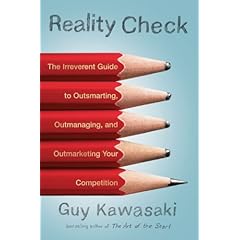 I'm looking forward to two (most likely good) books from my favorite business authors that are coming out later this month:
Seth Godin's Tribes and Guy Kawasaki's Reality Check both come out in a few weeks and I'm sure they will quickly become required reading for entrepreneurs and marketers everywhere.
For a long time, I've admired both of these authors for their ability to cut through the BS and provide business advice that you can apply to your business immediately. There's no academic, theoretical garbage to muck up the messages. You come away from reading anything by these authors thinking, "I already knew what they told me, but they presented it in a much better way than I ever thought of."
Anyway, pre-order these books on Amazon. I'm sure you won't be disappointed.
Wednesday, October 08, 2008
Organize your Business for Growth
 I really enjoyed John Jantsch's post yesterday about organizing your marketing. The real insight for me was the idea that even very small organizations should have an org chart for how they would like their organization to look in the future. To quote from John:
See, here’s the deal, even if it’s just you and Louie, he does this, you do that, you need an org chart for your business. Here’s why. No matter how many actual people you have in your organization, your business has many functions, it’s just that they are being done - or not being done - by just you and Louie.By creating an organization chart, and acknowledging all the functions, you stand a far greater chance of developing individual systems and strategies to make sure the work in each area is organized and done. Not to mention the fact that you are laying the foundation for growth if and when you have bodies to put in more of the boxes on your chart.
This concept about laying the foundation for growth is critical for small businesses, especially as we all look at the global economic crisis and wonder how we are going to grow our businesses. They key is planning for growth and changing your outlook from "glass half empty" to "glass half full." This attitude alone will help you and your employees look forward and work with you to figure out how to grow rather than focusing all your time on working through worse-case scenarios.
So, go out and create your org chart and plan for growth. This discipline alone will help you organize your business so that you get things done. And getting things done will lead to growth.
Subscribe to:
Posts (Atom)